
4 Key Indicators It's Time to Replace Your Operating Room Table Pad
Learn the key indicators signaling the need to replace your operating room table pad to ensure patient safety and comfort. Explore tips and options...
3 min read
In today’s highly competitive and regulated medical device market, Original Equipment Manufacturers (OEMs) face increasing pressure to deliver innovative products faster, without compromising quality, compliance, or patient safety. As a result, many OEMs are rethinking traditional outsourcing models and turning to Contract Development and Manufacturing Organizations (CDMOs) that offer more than production alone.
A growing number of leading OEMs are partnering with CDMOs that own product design, engineering, and regulatory responsibility alongside manufacturing. This integrated approach delivers measurable advantages across speed, cost, compliance, and long-term product success.
Below, we explore the strategic benefits of working with a full-service medical device CDMO that manages design and regulatory oversight from concept through commercialization.
When product design, engineering, manufacturing, and regulatory strategy are managed by a single CDMO, development timelines shrink dramatically.
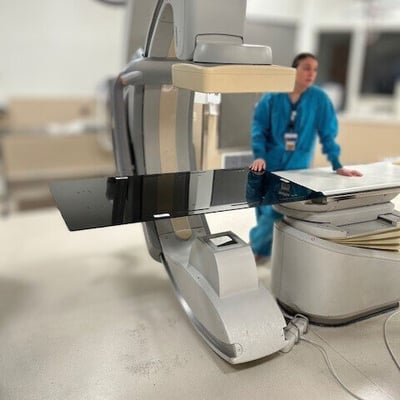
By eliminating handoffs between external design firms, manufacturers, and regulatory consultants, OEMs benefit from:
Regulatory considerations such as FDA submission strategy, EU MDR alignment, and risk management are embedded from day one, reducing late-stage surprises and accelerating approval timelines.
Owning internal design, quality, and regulatory teams is resource-intensive and difficult to scale. When a CDMO assumes responsibility for these functions, OEMs gain operational relief without sacrificing control.
Key benefits include:
Reduced need for internal engineering and regulatory headcount
Fewer vendors and simplified project management
Less administrative and compliance-related overhead
This allows OEM leadership to focus on commercialization, market expansion, and long-term portfolio strategy.
CDMOs that design the products they manufacture naturally prioritize design for manufacturability (DFM) from the earliest stages.
This results in:
More efficient production processes
Improved yields and scalability
Lower unit costs and reduced scrap
Fewer downstream manufacturing changes
By aligning design intent with real-world manufacturing constraints, integrated CDMOs help OEMs avoid costly late-stage modifications.
Medical device development is inseparable from regulatory compliance. CDMOs with in-house regulatory expertise support global requirements, including:
FDA 510(k), PMA, and QMSR
EU MDR and technical documentation
ISO 13485 quality management systems
International market submissions
When regulatory strategy is integrated into design and manufacturing, OEMs experience:
Fewer audit findings
Reduced submission delays
Lower risk of nonconformances or recalls
This proactive compliance approach protects both timelines and brand reputation.
Working with a single CDMO instead of multiple external partners reduces both direct and indirect costs.
Consolidation eliminates the need for:
Separate product design firms
Independent regulatory consultants
Multiple testing and validation vendors
OEMs benefit from more predictable budgets, fewer contracts to manage, and reduced coordination costs across suppliers.
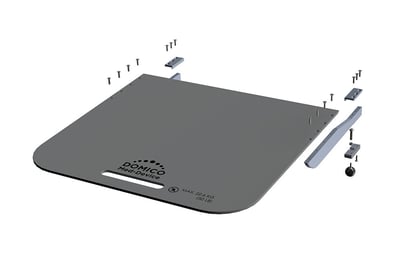
With engineering, manufacturing, and regulatory teams working under one roof, CDMOs enable faster iteration cycles.
This integrated structure supports:
Rapid prototyping and early feasibility testing
Immediate feedback between design and manufacturing
Faster design verification and validation (DV&V)
The result is quicker learning, better design decisions, and shorter development timelines.
One of the most valuable advantages of an integrated CDMO partnership is single-source accountability.
Instead of managing responsibility gaps between vendors, OEMs gain:
Clear ownership of design, production, and compliance
Fewer disputes and delays
Smoother program execution
This unified accountability model improves communication, reduces risk, and strengthens overall project outcomes.
![9013 [Child Hugger with Table Adapter] #1](https://www.domicomed.com/hs-fs/hubfs/9013%20%5BChild%20Hugger%20with%20Table%20Adapter%5D%20%231.png?width=367&height=245&name=9013%20%5BChild%20Hugger%20with%20Table%20Adapter%5D%20%231.png)
CDMOs with integrated quality systems embed quality at every stage, from design controls and risk management to manufacturing and post-market surveillance.
Beyond launch, these partners can support:
Post-market monitoring and complaint handling
Design changes and regulatory updates
Next-generation product development
This lifecycle-focused approach ensures sustained performance and regulatory compliance long after commercialization.
By leveraging a CDMO that owns design and regulatory responsibility, OEMs gain the ability to scale efficiently without building large internal teams.
This flexibility allows OEMs to:
Enter new markets faster
Expand product portfolios with less risk
Adapt quickly to regulatory or market changes The result is a more agile organization positioned for long-term growth.
Medical device CDMOs that own product design, engineering, manufacturing, and regulatory responsibility offer OEMs a powerful, integrated pathway from concept to commercialization.
By consolidating expertise under one partner, OEMs benefit from:
Faster time to market Stronger regulatory compliance
Lower costs and reduced risk
Higher product quality and scalability In an increasingly complex and competitive landscape, integrated CDMO partnerships help OEMs bring innovative medical devices to patients, faster, safer, and more efficiently.
Learn more about Domico Med Device's product design process by clicking below!

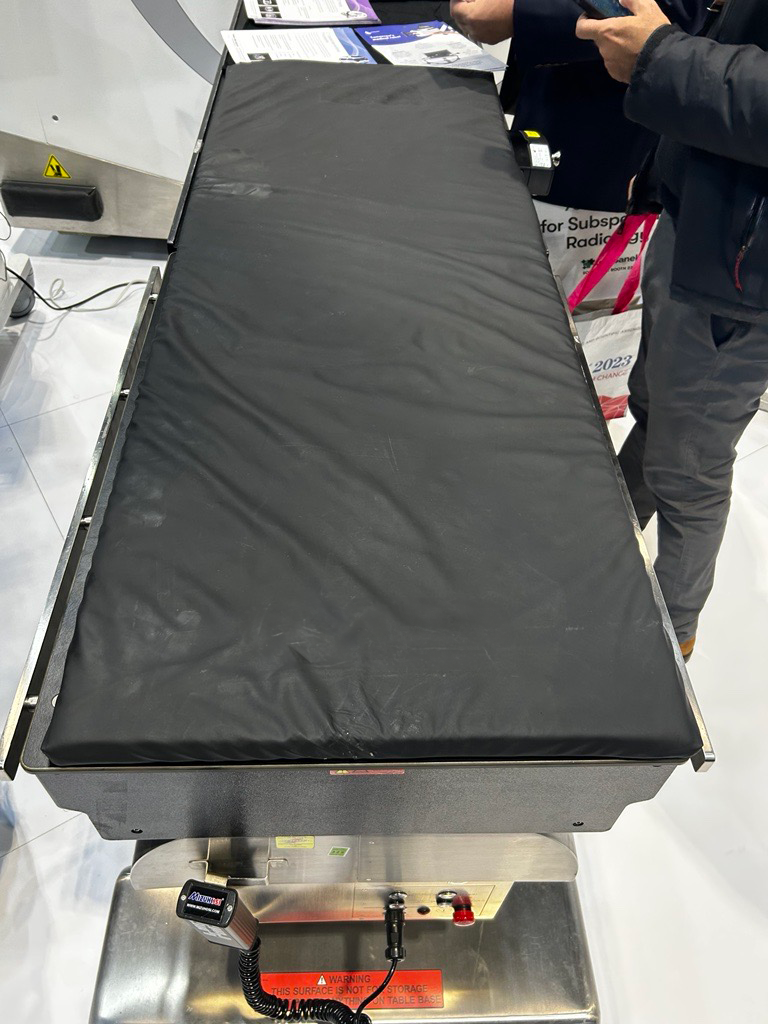
Learn the key indicators signaling the need to replace your operating room table pad to ensure patient safety and comfort. Explore tips and options...

Revitalize your operating room with Domico Med-Device products to enhance patient comfort and satisfaction. Explore innovative solutions for optimal...
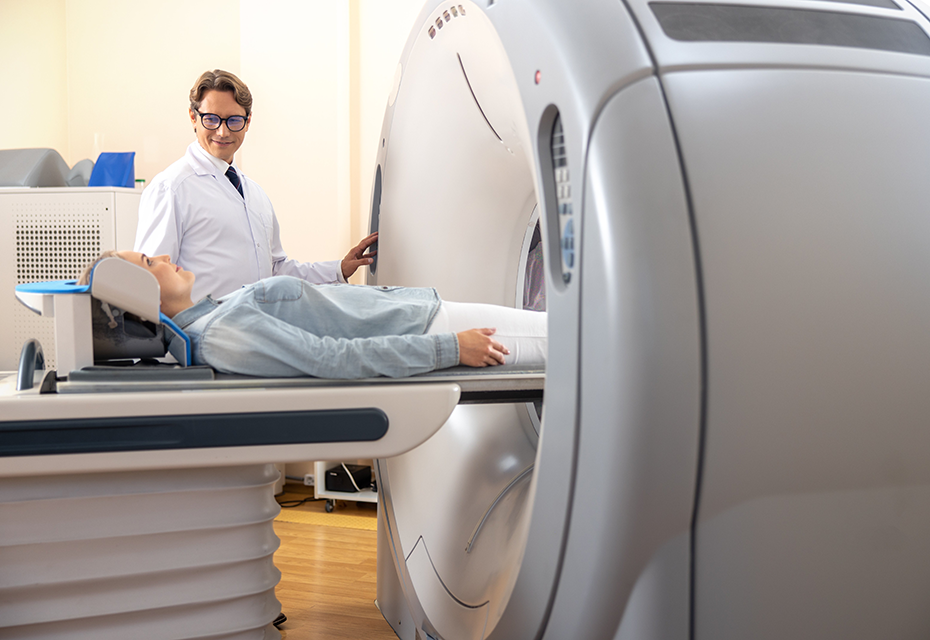
Learn how patient positioning accessories play a crucial role in enhancing the quality and accuracy of CT scan results.