
PE, PU, and Nonwoven Materials Compatible with Sterilization for Single-Use Medical Devices
Learn how PE, PU, and nonwoven materials support sterilization in single-use medical devices, ensuring safety, durability, and regulatory compliance...
1 min read
Patient positioning products play a critical role in modern healthcare. From diagnostic imaging and radiation therapy to surgery and long-term care, these products must provide comfort, stability, pressure management, and repeatability—often for extended periods of time.
At the core of these products is foam material selection. Different types of foam offer distinct performance characteristics that directly impact patient outcomes, device compatibility, and product longevity. Selecting the right foam is essential for balancing comfort, support, durability, cleanliness, and regulatory compliance.
Polyurethane foam is one of the most widely used materials in medical positioning due to its versatility and cost efficiency. It is available in a wide range of densities and firmness levels.
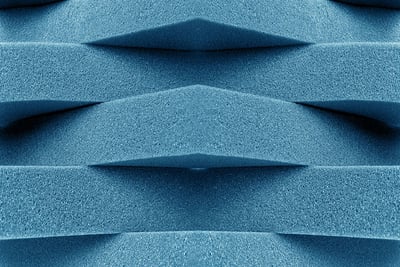
Open-cell structure
Available in soft to firm configurations
Lightweight and easily shaped
Good patient comfort for short- to mid-duration procedures
Cost-effective for disposable or semi-disposable products
Easy customization for contoured designs
Imaging pads and cushions
Surgical table overlays
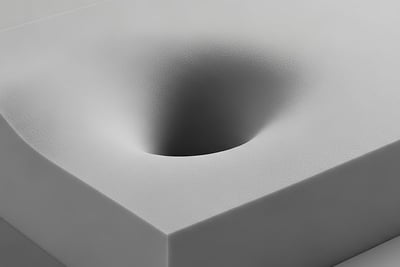
Viscoelastic foam responds to heat and pressure, conforming closely to the patient’s body.
Slow recovery after compression
High surface area contact
Excellent pressure redistribution
Improved comfort during lengthy procedures
Enhanced immobilization
Radiation therapy positioning
Long-duration surgical supports
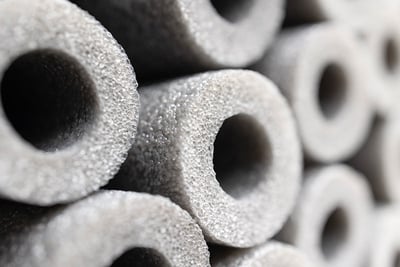
Closed-cell foams are non-porous materials that resist fluid absorption and provide firmer support.
Water- and fluid-resistant
High firmness and shape retention
Excellent cleanability and infection control
Consistent support and positioning accuracy
OR positioning blocks
Reusable wedges
Gel-infused foams combine foam structures with gel layers to enhance pressure distribution.
High viscosity gel layers
Benefits:
Superior pressure relief
Reduced shear forces
High-risk surgical positioning
ICU supports
Rigid structural foams are designed for load-bearing and positional accuracy.
Very high density
Precise and repeatable positioning
Long-term dimensional stability
Imaging alignment components
Radiation therapy immobilization
Specialty foams are engineered for antimicrobial performance, radiolucency, and flame resistance.
Medical-grade formulations
Enhanced infection control
Compliance with medical standards
Foam material selection is a foundational design decision for patient positioning products. Understanding the characteristics and benefits of each foam type allows manufacturers to optimize patient comfort, procedural accuracy, and long-term product performance.
Click below to learn more about foam fabrication at Domico on our capabilities page


Learn how PE, PU, and nonwoven materials support sterilization in single-use medical devices, ensuring safety, durability, and regulatory compliance...
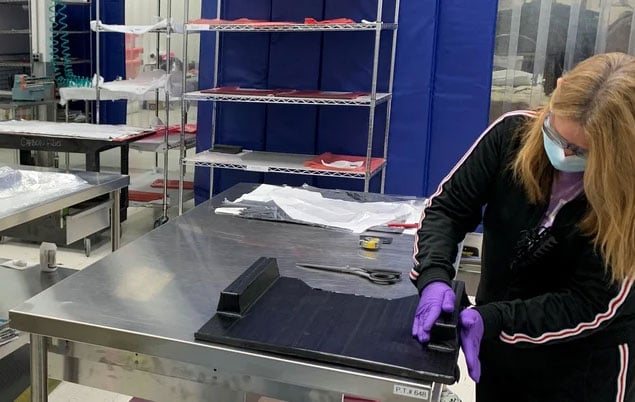
Discover how carbon fiber manufacturing helps medical device OEMs achieve lightweight strength, durability, and improved imaging performance while...
Explore how compression molding supports medical device manufacturing across imaging, image-guided therapy, and surgical applications with durable,...